How to Tell if a Chrome Hearts Hoodie or T-Shirt Is Real: Tags, Prints and Stitching
A practical legit-check guide to Chrome Hearts hoodies and tees: how to read the care label, barcode label and neck print, and what the print, stitching and hardware should look like.
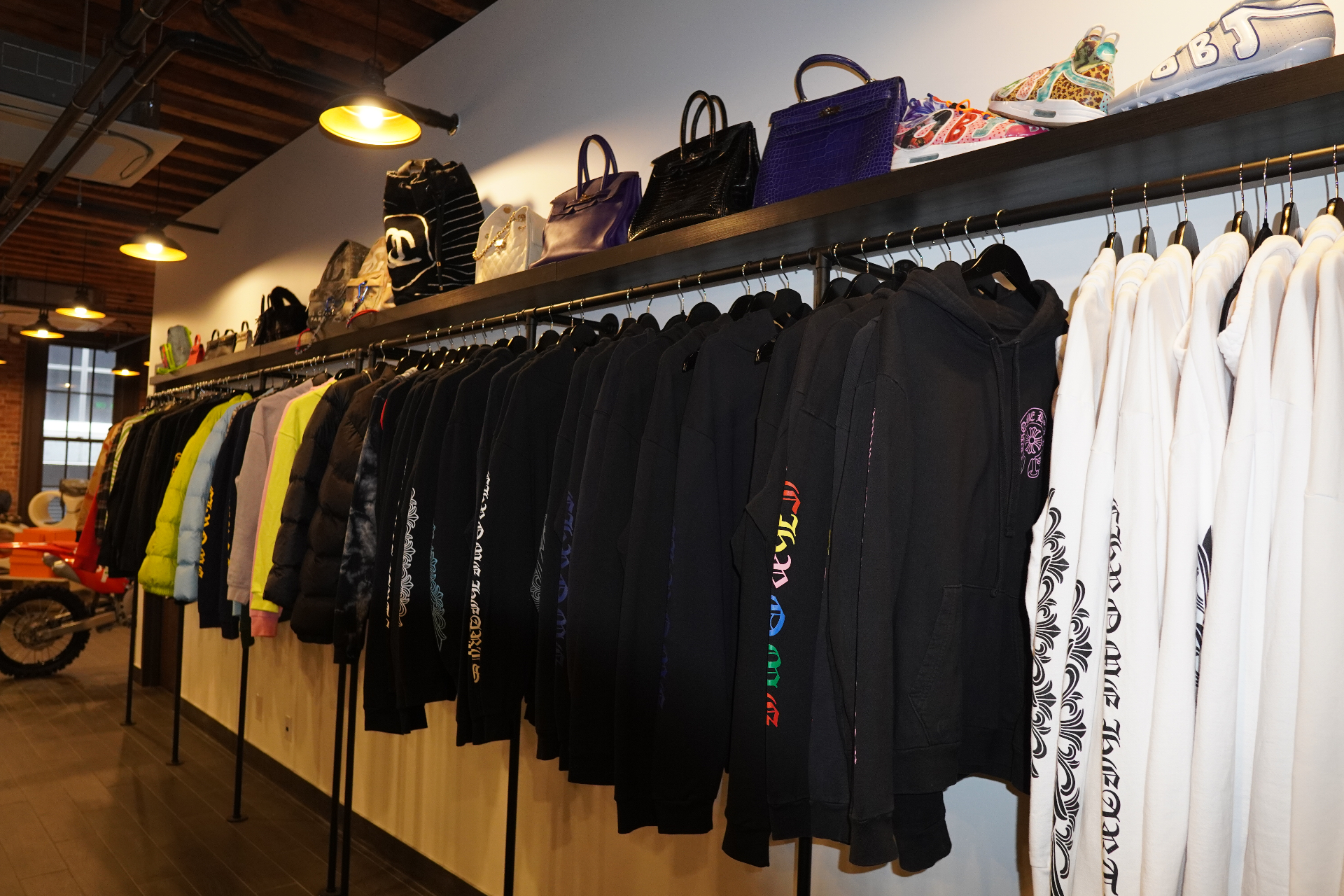
To tell if a Chrome Hearts hoodie or T-shirt is real, start with the tags, then check the print, then the stitching and hardware. The tags are where most counterfeits slip: the care label, the barcode label and the neck label or print should all show sharp, correctly spelled text with even spacing and consistent letter weight. After that, look at whether the graphics have crisp, detailed linework, whether the stitching is neat, and whether the fabric has the heft of a genuine piece.
A caveat worth stating up front. Clothing has no hallmark the way silver does, so authentication is cumulative: you are looking for a group of small details that agree, not one decisive flaw. Labels differ between years and releases, counterfeits keep improving, and washing and wear change how genuine pieces look. Use this guide to screen pieces and spot the obvious problems. For anything expensive or uncertain, a hands-on check by someone who handles genuine pieces every day is the only reliable answer.
Once Legos is an independent NYC reseller of pre-owned Chrome Hearts. We are not affiliated with, endorsed by or authorized by Chrome Hearts, and this guide describes what we look at when we inspect clothing, not an official Chrome Hearts standard.
Why clothing is harder to check than silver
Chrome Hearts makes most of its clothing in Hollywood, Los Angeles, where the brand has been based since it started in 1988. A silver ring can be weighed and its stamps read. A hoodie or tee gives you printed labels, print geometry, stitching and fabric, and every one of those can be altered by age, washing and wear. That is why experienced authenticators compare several details against a confirmed genuine piece of the same design and era rather than relying on any single tell.
Start with the tags
The care label
On a genuine hoodie, the care label shows the Chrome Hearts logo positioned vertically on the left, with the fabric content printed in several languages (English, French, Mandarin, Korean and Japanese on hoodies), and the lettering should be the same thickness and evenly spaced throughout.
In published comparisons, counterfeit care labels most often have lettering that is too thick and cramped, with a logo that is hard to read. Wrong letters in the logo or misspelled words are a red flag. The label itself matters as well: genuine labels are described as silk-like, while fake ones can feel flimsy, plasticky or rough. Check the stitching holding the label in place too. It should be neat and even.
The barcode label
Many pieces carry a small label with the CH mark above a barcode and a line of numbers, often with a registration (RN) number. The CH mark should be sharp and well defined, and the barcode lines and digits clean and evenly weighted. This label is a known weak spot for counterfeits, but published comparisons disagree on which way the fakes go: some describe the CH mark as too thin and weak, others as too thick and bloated, and the digits under the barcode are reported as too thin or poorly defined on fakes. Rather than memorizing a direction, compare the shape and line quality against a verified genuine label.
The neck label or neck print
T-shirts often carry a printed neck label with the logo, the size and Made in U.S.A. text, while hoodies usually have a sewn neck tag. Distressing is part of the look, but the fine detail should still read: letters correctly spelled and evenly spaced, and the small floral detail inside the cross visible. Warning signs include thin, faded lettering on a sewn tag, a solid flat print with no fine detail, or a fade that looks digitally applied rather than worn. Some authenticators call the neck label the most telling detail on a tee.
Check the print and graphics
Genuine graphics have crisp edges and precise linework. The horseshoe, the cross and the scroll work should be sharp, letters should not merge into each other, and the small floral tips should stay fine rather than bloated. The gap between elements, such as the two scroll ribbons at the bottom of a chest logo, should look deliberate and even.
Counterfeits more often show lines that are noticeably thicker so the lettering runs together, shapes that are slightly warped or asymmetrical, blurry or pixelated edges, and designs that sit off-center or at the wrong size. Compare placement and proportion against photos of the same design from a confirmed genuine piece.
One thing to keep in mind: genuine prints crack, fade and soften with washing. Judge the shape and linework, not how fresh the ink looks.
Look at the fabric, stitching and construction
Retailers describe genuine hoodies as heavy cotton fleece, and the stitching on a real piece is tight and even, with no loose threads and straight seams. Counterfeits often use thinner, rougher or flimsier fabric, with crooked tags, uneven stitching or loose threads. Hold the piece against one you know is genuine if you can. A hoodie that feels noticeably light or thin for its design is worth a second look.
Labeling is worth reading for country of origin as well. Published guides expect Made in U.S.A. text clearly printed on the neck print and the care labels, consistent with the brand producing most of its clothing in Hollywood. A missing or oddly worded country of origin deserves a question, although labeling can vary between releases, so confirm against the same release before drawing a conclusion.
Zip-ups: check the hardware
Many Chrome Hearts zip-up hoodies are described by retailers as finished with a heavy-gauge zipper and a .925 sterling silver dagger zipper pull. The pull should feel solid and substantial, with crisp detail and clean edges. One that feels light, looks soft or has blunted detail needs a closer look. The weight and casting checks in our guide to how to tell if Chrome Hearts jewelry is real apply here too.
What wear can and cannot tell you
Pre-owned clothing adds a second question: is it real, and what condition is it in? They are separate. A genuine hoodie can be faded, cracked and pilled, and a fake can be near perfect, so wear alone says nothing about authenticity. At Once Legos, authenticity is checked first and condition is then described with one of five grades that appear on every listing:
- Brand New: unworn, with no visible signs of wear.
- Excellent: only minimal signs of wear.
- Great: some signs of wear.
- Good: visible wear that does not affect how the piece wears.
- Fair: notable signs of wear, shown in the photos.
A missing, cut out or replaced tag is a different matter. Tags are one of the main checks, so without them you have less evidence to work with. Ask for other proof or get the piece looked at in hand.
What does not prove a garment is real
- Hang tags and packaging: poor-quality hang tags are a warning sign, but a good-looking one can be attached to anything.
- Receipts: a photo of a store receipt can be fabricated or belong to a different item.
- One good tag photo: counterfeiters can get one label right. The question is whether everything agrees.
- The price or the seller's story: neither is evidence about the garment itself.
How to compare a piece properly
- Find photos of a confirmed genuine piece of the same design and era, ideally of the labels as well as the front.
- Photograph your tags flat, in even light and at the same scale, so you can compare letter by letter.
- Compare the care label, barcode label and neck label for font weight, spacing and spelling.
- Compare the print geometry: line thickness, gaps and the shape of the logo.
- Check the stitching, the fabric weight and any hardware.
- If anything is borderline, stop and have it checked in hand rather than talking yourself into it.
How we check clothing at Once Legos
We inspect clothing against a category-specific checklist and cross-reference each piece against our reference archive. Spelling errors and poor-quality hang tags are among the common signs we reject on, along with a lightweight feel. If a piece is borderline, it is documented with photos and gets a second review against references before we will buy or list it. Our FAQ explains the process and how we grade condition.
The same approach, tags first and then print or embroidery and hardware, applies to hats and other categories. If you own a hoodie or tee and want to know where it stands, send photos through Sell To Us for a same-day offer. Payment is released once the piece is in our hands and passes authentication. To feel the fabric and read the labels yourself, book a private one-on-one visit at our NYC Showroom, or browse the hoodies and T-shirts we have in hand.
The bottom line
Read the tags first, then check the print, stitching, fabric and hardware, and trust the pattern rather than any one detail. Be most wary of lettering that is too thick or cramped, logos that look warped or blurry, thin fabric and tags that feel flimsy. And because counterfeits keep improving, a hands-on inspection remains the only reliable way to be sure.
Frequently asked questions
- How can you tell if a Chrome Hearts hoodie is real?
- Start with the tags. The care label should show the logo vertically on the left with evenly weighted, correctly spelled lettering in several languages, and the barcode label and neck tag should be sharp and clean. Then check that the print has crisp, precise linework, the stitching is tight and even, the fabric is heavy cotton fleece, and any zipper pull on a zip-up feels solid. Counterfeits keep improving, so a hands-on inspection is the most reliable check.
- How do you tell if a Chrome Hearts T-shirt is real?
- The neck print and the care label are the best places to look. The neck print should have correctly spelled, evenly spaced text and legible fine detail even when it is distressed, and the care label lettering should not be too thick or cramped. Then compare the chest or back graphic for sharp, even linework and check the stitching around the labels.
- What should a real Chrome Hearts care label look like?
- On a hoodie, the Chrome Hearts logo sits vertically on the left and the fabric content is printed in several languages, with lettering of consistent thickness and even spacing. Fake labels more often have lettering that is too thick and cramped, a logo that is hard to read, spelling errors, or a flimsy, rough feel. Labels can differ between releases, so compare with a genuine piece of the same design and era.
- Are Chrome Hearts hoodies made in the USA?
- Most Chrome Hearts clothing is produced in Hollywood, Los Angeles, and published legit-check guides expect Made in U.S.A. text on the neck print and care labels. Labeling can vary between releases, so a different or missing label is a reason to ask questions and compare against the same release, not an automatic sign of a fake.
- Can a worn or faded Chrome Hearts hoodie still be real?
- Yes. Fading, cracking prints and pilling are normal wear on genuine pieces and say nothing about authenticity either way. Judge the shape of the logo, the label lettering and the construction, and treat wear as a condition issue. At Once Legos, condition is shown as a grade of Mint, Excellent, Good or Fair on every listing.
- Can I send photos of my hoodie to find out if it is real?
- Photos can catch obvious problems such as thick or misspelled label lettering, but they cannot show fabric weight or stitching quality, and good counterfeits can look right in pictures. At Once Legos you can send photos and your asking price for a same-day offer, and payment is released once the piece is in hand and passes authentication.